
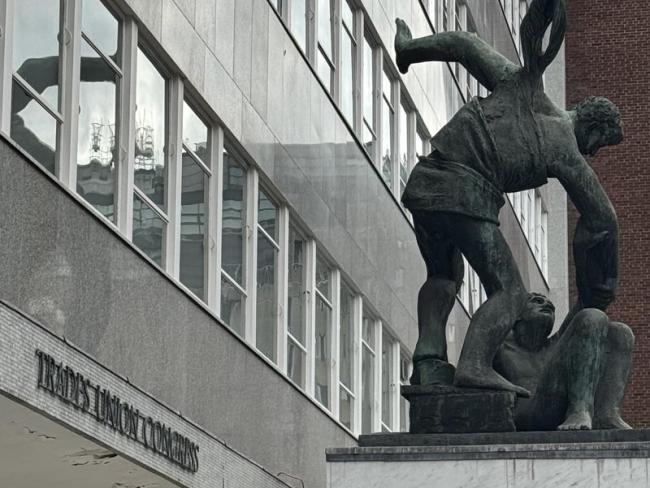
September sees an increased focus on Britain’s trade unions as the TUC holds its annual meeting in Brighton.
Only around one worker in seven is a trade union member. This perhaps shows the lack of faith that people have that unions will help them to confront their everyday challenges. That is also reflected in the lack of participation of those in membership.
Britain’s two largest unions have elected general secretaries during the past year. Fewer than 10 per cent of Unite’s 1.1 million members voted in the recent election. And just 7 per cent of Unison’s 1.4 million members voted in last year’s election.
And the gap between the concerns of the five million plus members of the TUC’s 47 unions and those of their leaderships has never been greater.
The priorities for Britain’s workers are many, including pay and conditions, jobs, housing, energy security and costs, immigration, and the threat of war. But will the debates at the TUC reflect them? The preliminary agenda suggests otherwise.
A motion at the TUC condemns the new Equality & Human Rights Commission Code of Practice clarifying that “sex” under the Equality Act 2010 means biological sex. It calls for a “campaign to introduce a process of gender self-declaration”.
This posturing is unlikely to find much support outside a small bubble of activists. Most workers have been unimpressed by Unison’s abandonment of the Darlington nurses who complained about sharing changing rooms with biological men.
And workers will be unimpressed with calls to defend teachers from Reform-run Councils and “the far right”, when there is still a deafening silence about, and a complete lack of trade union support for, teachers threatened by religious bigots.
Rail union RMT wants the TUC to avoid taking the country into divisive debates on the EU/single market membership, and to respect the democratic will expressed in our 2016 vote to leave the EU. But Prospect seems to have little time for workers’ views: it wants the TUC to “develop and implement a strategy to persuade the government to negotiate the deepest possible partnership with the EU”.
This summer has seen workers being more willing to involve themselves in actions to address deeply held and widely felt issues in their workplaces. Transport workers and others have dealt with excessive heat. Others have tackled understaffing and its consequences. Perhaps as a result, the TUC agenda does cover some of these matters.
But unions need to do more to properly engage with their members, and far more to reflect members’ concerns. They need to rediscover their enthusiasm for organising the many workers who are not in membership, many of them in workplaces with existing collective bargaining agreements.
Workers taking more responsibility and involving themselves in their unions is a crucial early step towards taking political control.