
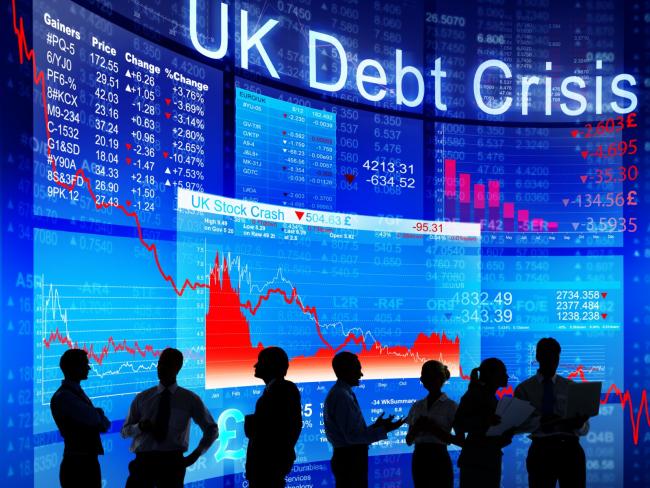
According to the latest official figures, government debt currently stands at around £2.9 trillion, equivalent to around 95 per cent of the country’s gross domestic product.
Interest on this debt was, at £110 billion for 2025-26, the highest in several decades. Government borrowing in May was £23.3 billion, up 30 per cent on a year ago. At this rate, the debt will hit £3 trillion within a few months.
Upwards
Occasionally we hear that borrowing costs are down on unexpectedly good economic news. But that’s only transitory – the trend is relentlessly upwards, exacerbated by higher interest rates.
Borrowing ever more to cover an income shortfall would trigger alarm bells for any prudent householder. But it is endemic to government thinking.
Historically, the UK government, like most others, spends more that it receives in taxes. It borrows money each year to cover the deficit, primarily through the issue of bonds, known as gilts.
Increase
Financial institutions buy these gilts, effectively lending the government money for its spending. They charge interest over the period of the gilt, and then recover the original sum at maturity. Borrowings increase with unexpected spending, such as the financial crash of 2008, or the Covid pandemic.
Over recent years, the Bank of England (the largest lender to the UK government), has departed from previous practice. It now selling on the gilts is holds before they mature, often at a discount of as much as 50 per cent.
“Short term gain for the Bank of England means long term loss to the Treasury.”
Short term gain for the Bank means long term loss to the Treasury. Over the last four years, this has resulted in a net loss of £36 billion, which the Treasury repays the Bank under a deal brokered in 2008. This further reduces the scope for national spending on infrastructure projects or investment to protect vital industries and assets.
The governor of the Bank of England, Andrew Bailey warned a House of Lords Committee on 2 June of the risk of a “vicious circle” of rising borrowing costs if the government fails to control its debts. Despite that he is still defending the policy of selling gilts.
Faster
According to a report in the Daily Telegraph on 8 June, Britain’s national debt is growing faster than any country tracked by the International Monetary Fund. That’s not something we hear about from the Chancellor, Rachel Reeves.
When we’re told that taxes must rise or spending must fall, the right response is to challenge the spiralling cost of funding vanity projects (many of them “green”) at the expense of safeguarding industry and looking after the basics.