
20 May 2026
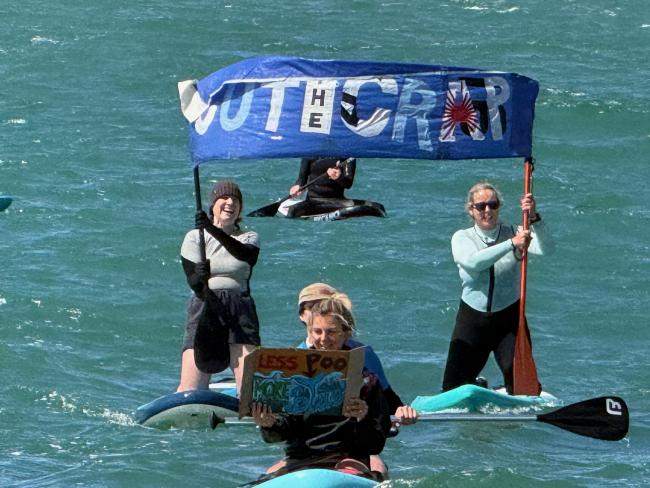
Telling it like it is, Surfers Against Sewage, off the coast at Seaford, East Sussex, 16 May. Photo Workers.
Britain’s beaches and rivers continue to suffer poor water quality despite continuing protests and complaints. The latest action took place on Saturday 16 May.
Thousands of kayakers, paddle-boarders and swimmers took part in a “Paddle Out” organised by Surfers Against Sewage. Events were held at over 50 locations on Britain’s beaches and inland waters.
Massive
People turned out to protest against increasingly frequent sewage releases into our seas and waterways.
Nationally, the problem is massive, with over 300,000 hours of discharges in 2025. A speaker at one of the rallies in Sussex reported 16 local sewage discharges of over 72 hours in 2026 alone.

The government announced a Clean Water Bill in the King’s Speech on 13 May; critics say it’s insufficient.
Failed
Surfers Against Sewage argue that the bill does nothing to tackle a failed system that has allowed increasing pollution. Meanwhile shareholders profit and consumer bills soar.
Britain’s water industry is 70 per cent foreign-owned. The campaign group Common Wealth has produced a detailed analysis of the US, Canadian, Australian and Asian and Arab owners of Britain’s water.
Crisis
The biggest supplier, Thames Water, provides water to 16 million people in the capital and its environs. It staggers from crisis to crisis. Predicted to run out of cash in months, creditors and potential investors quarrel over the division of the spoils.
Ofwat, the industry regulator, is reported to be offering suspension of fines incurred by Thames for failure to meet pollution, leakage and other performance targets. In doing so, Ofwat hopes to make it more attractive to “investors”.
Thames Water, together with Ofwat and the government, put their faith in a “market-led” solution. But arguably that’s the problem. There can be few starker examples of how capitalism wrecks public utilities than the British water industry.