
9 September 2026
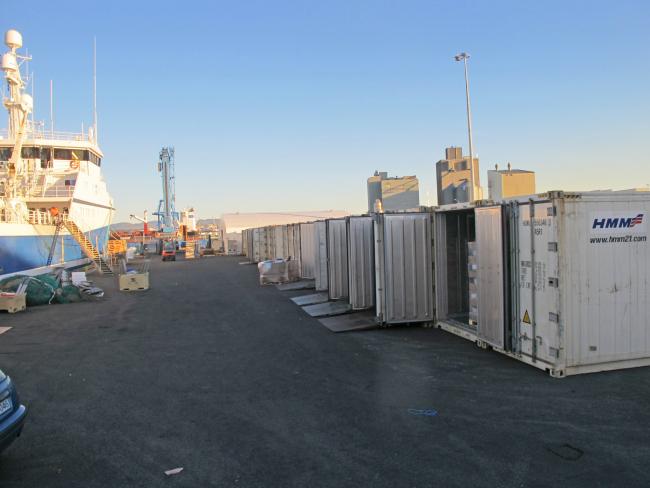
Fresh caught and frozen fish being loaded from a trawler for export to Africa. This key part of the Icelandic economy is supported by its sustainable fishing policies. Photo GRID-Arendal / Peter Prokosch via Flickr (CC BY-NC-SA 2.0).
The people of Iceland have rejected restarting accession talks to join the EU. In the referendum held on 29 August 52.8 per cent of those voting said “No”; 47.2 per cent said “Yes”. The result is internationally significant.
A high proportion of the electorate voted – a turnout of around 82.5 per cent. Reykjavik, the capital, was the only part of the island nation of 400,000 to vote in favour restarting talks to join the EU.
Setback
As with the 2016 EU referendum in Britain, the establishment led by prime minster Kristrún Frostadóttir campaigned for “Yes”. This is a significant setback for the EU and its desire to expand the bloc, as well as its strategic aims in the Arctic.
‘Iceland’s fishing the lifeblood of their economy and national identity.’
Iceland’s fishing industry is the lifeblood of their economy and at the heart of their national identity. Joining the EU would have meant joining the bloc’s common fisheries policy. That would have opened up the country’s waters and their prized stocks of cod and haddock to trawlers from other EU nations.
And probably it would have meant an end to Iceland’s commercial whaling industry as the EU bans whaling trade and derived products. Whaling has deep historical and cultural roots in Iceland and its loss would be a devastating example of diminished sovereignty.
Sustainable
Iceland has long advocated and operated sustainable and responsible fisheries management, without the help of the EU. This is recognised by independent bodies such as the Marine Stewardship Council.
Also, as one of Europe’s wealthiest countries per capita, Iceland would have become a net contributor to the EU’s budget.
Iceland already has close ties with the EU. It has been part of the European Economic Area since 1994 and is a member of both the single market and the Schengen travel area – a similar position to Norway.
Resistance
But the referendum majority shows a firm resistance to joining the full EU. This is a wonderful example of people not being easily swayed but sticking to their guns.
And EU member countries have taken note. Ireland for example now wants the fishing concessions apparently on offer to Iceland.
However, the Reykjavik establishment may still try to thwart the popular vote, even though it says it will respect the result, and the EU will not give up either. The Icelanders will need to keep up the pressure.