
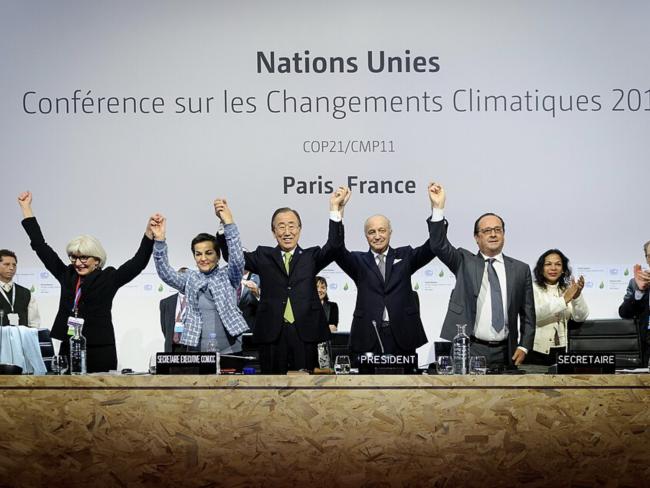
The Paris COP meeting, 2015: all smiles and self-congratulation. Photo Arnaud Bouissou - MEDDE (Public domain)
Where did the idea of net zero itself come from? It’s an interesting question because the term “net zero” was the preserve of scientists and policy specialists until the second half of the last decade.
Net zero means that any greenhouse gases (mainly CO2, methane and nitrous oxide) emitted into the atmosphere are balanced by greenhouse gases removed from the atmosphere.
Note: that doesn’t mean that no oil or gas is burnt.
The general idea was broadly established as a target at the Paris COP meeting (COP 21) in 2015. But the term “net zero” was not used in the agreement that emerged.
What the Paris COP Agreement actually said was that the aim was to “reach global peaking of greenhouse gas emissions as soon as possible”, and a balance of anthropogenic [made by human activity] greenhouse gas emissions and removals “in the second half of this century” in the context of “sustainable development and efforts to eradicate poverty”.
Note: not net zero by 2050, but net zero “in the second half of this century”.
• Related article: Net zero: a money machine for finance capital