
When talking about energy policy, it’s worth looking in detail at Britain’s energy needs and supply – and what that means for industry and households…
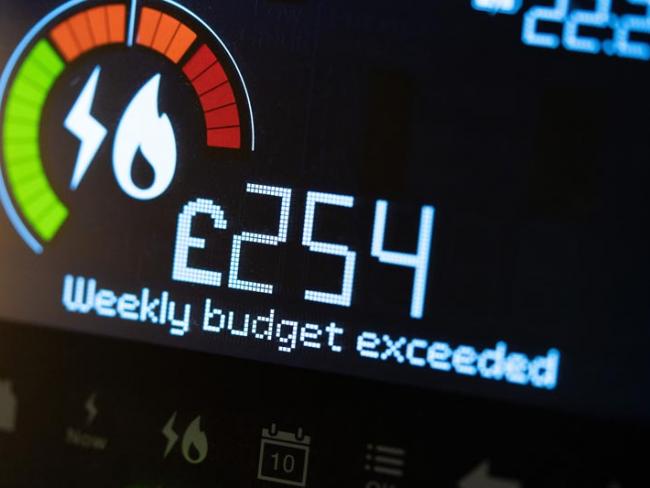
People know what is going on with their energy bills. A More in Common poll in March showed that rising energy bills have overtaken higher food prices as the public’s biggest cost of living concern.
The average household energy bill is to rise by £209 a year to £1,850. Household energy debt has more than doubled over the last three years to £5.5 billion.
The government blames Brexit for these rises, but they are the effect of its own net zero policies. Its charges and levies are the main driver of higher household bills, not wholesale gas prices. And they could add a further £300 to each household bill over the next 4 to 5 years.
Each successive government has had decarbonisation as an overriding aim. But this compromises the need British industries have for secure, reliable and cheap energy. “Sustainable growth” has undercut real growth.
The UN accounting system for carbon dioxide (CO2) emissions doesn’t count emissions from making products from imported goods, or from using imported hydrocarbons. Imported goods often create far higher emissions than their British-made equivalents.
For example, using North Sea gas rather than importing liquefied natural gas from the USA would cut CO2 emissions by an estimated 218 million tonnes. Or there’s the possibility of gas from the Gainsborough Trough field in Lincolnshire. It holds at least 480 billion cubic metres of recoverable gas.
Britain is importing ever more goods – with their own carbon footprint arising from their manufacture and transport. These imported goods now account for over 60 per cent of Britain’s carbon footprint.
The government claims a reduction in emissions of about 50 per cent between 1990 and 2022, in line with its targets. But take account of imported emissions and the fall is less than 20 per cent.
‘Net zero policies result in a perverse incentive to send British industrial production and supplies abroad…’
Net zero policies result in a perverse incentive to send British industrial production and supplies abroad. Offshoring may help to meet arbitrary net zero emissions targets. The cost is that Britain is heading to net zero industry.
In 2024, Britain still relied on oil, gas and a little coal for 75 per cent of primary energy consumption. Gas alone accounts for 40 per cent. Oil and gas fuel the cement, ceramics, glass, aluminium and steel industries. High energy costs penalise these industries, vital for building, driving up construction costs.
The output of Britain’s energy-intensive manufacturing industries is at its lowest level for 35 years. The share of manufacturing in Britain’s gross domestic product has fallen dramatically – from 16 per cent in 1990 to 8 per cent in 2022. Unsurprisingly, CO2 emissions have halved.
Falling production
But British oil production fell from 53 million tonnes in 2009 to 31 million in 2024. Gas production fell from 436.5 gigawatt-hours in 2009 to 343.9 gigawatt-hours in 2024.
Even the Climate Change Committee admits that Britain will need 13 to 15 billion barrels of oil equivalent in fossil fuel energy each year from 2025 to 2050. We are on track to produce only 4 billion.
Successive governments have encouraged companies to import energy. That amounts to just under half the oil, half the gas, and almost 90 per cent of the coal. According to the Digest of UK Energy Statistics published in July 2025, Britain depended on imports for 44 per cent of the total energy need in 2024, up from 40 per cent the previous year.
Yet the North Sea Transition Authority – the government regulator – has said that up to 25 billion barrels of oil and gas could be recovered from our waters if world prices and our taxes were favourable.
Increasing domestic supply would cut industry’s energy costs, helping to revive industry, and would cut unemployment. North Sea Brent Crude is well suited to producing petrol, diesel, jet fuel and chemicals.
Conventional supply-and-demand economic theory assumes that imports will always be available to make good any shortfalls in supply. On this theory, it is always rational to replace domestic production with imports whenever they’re cheaper.
But capitalist economics doesn’t hold when there is any kind of international crisis affecting the flow of supplies. In these times, to depend on foreign suppliers is risky and expensive. The USA, from 1975 to 2015, chose to ban oil exports to ensure its own domestic supplies.
And Britain still has about 77 million tonnes of proven, recoverable coal reserves that could be profitably mined. Anti-coal activists try to prevent this, for example managing to close down Ffos-y-fran at Merthyr Tydfil, a mine with workable reserves.
Penalised
Coal-fired generation is cheaper than gas and renewables, when it is not penalised by the Emissions Trading Scheme and the Carbon Price Support mechanism. Without these, wholesale electricity prices would fall from £78.45 per megawatt-hour (in December 2025) to under £49. The Climate Change Levy adds 5-7 per cent to a typical non-domestic electricity bill, and raises the electricity price by £7.75 per megawatt-hour .
Britain will be short of reliable baseload electricity generation soon unless new capacity comes on stream fast. Baseload power is the minimum, continuous amount of electricity an electrical grid must supply to meet constant consumer and industrial demand 24 hours a day. New gas-fired power plants take eight years to build. Coal ones can be built quickly – in China it takes two years. Coal storage is easy and cheap.
Renewable energy payments cost British consumers over £17 billion a year. Renewables Obligations – separate subsidies paid to renewables companies – cost £7.8 billion in 2024-25.
Fossil fuels still account for over 80 per cent of the world’s energy consumption. Over three-quarters of the world’s population live in oil-importing countries. Net importers spent $1.7 trillion on fossil fuels in 2024. Every $10 increase in oil prices adds about $160 billion to the world’s import bill.
Global CO2 emissions rose by 3 per cent between 2022 and 2024. They rise in line with manufacturing output. Growing economies like China and India account for 40 per cent of the world’s emissions.
In 2024 Britain accounted for 1 per cent of world emissions, now for 0.8 per cent – 367 million tonnes, 54 per cent down from 1990. But global emissions increased by one per cent, 500 million tonnes, to a record high of 38.1 billion tonnes. All those decarbonisation efforts aren’t affecting global emissions.
Net zero by 2050 is still government policy, as it has been since 2019, when the Theresa May administration amended the 2008 Climate Change Act. This current government has just announced that it wants us to achieve an 87 per cut in emissions by 2040, accelerating the drive to destroy industry.
• Related article Doomsday? No way