
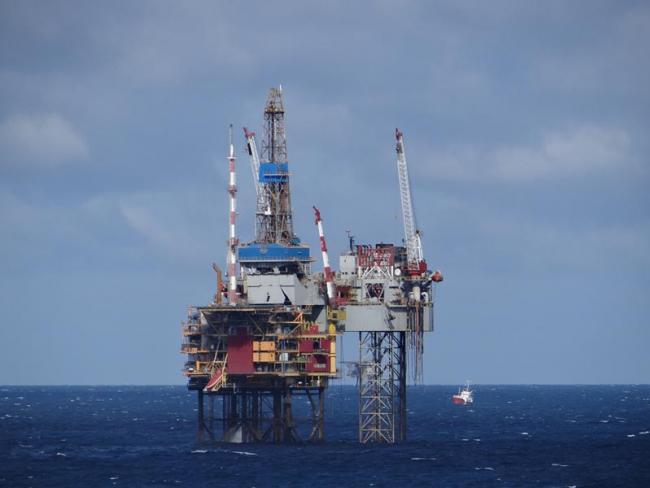
Measures to authorise new investment in North Sea oil and gas are becoming increasingly urgent…
New prime minister Andy Burnham is considering a reverse of previous policy preventing the exploitation of North Sea oil and gas. That would be a positive move and widely supported, but he may need more encouragement.
Reports suggest that decisions on the Rosebank and Jackdaw fields may be deferred until later in the year. But Burnham had better move quickly – because the estimated costs of closure are rising too.
A report from the North Sea Transition Authority (NSTA) published on 13 August estimated current decommissioning costs at £54 billion, up from £36 billion in 2022. Closing down exhausted or abandoned rigs is an expensive process in itself. A shortage of the ships and rigs needed to carry out this work is driving up prices.
Backlog
The NSTA report identifies a growing backlog of 500 wells which need to be plugged, and forecasts there will be more than 1,000 additional wells in need of decommissioning in the next five years.
These huge costs would be met by the taxpayer. They are driven by the Labour government’s determination to decarbonise the North Sea with a punitive tax regime which compels more and more companies to quit the area altogether.
BP, for instance, has already confirmed its intention to cease operating in the North Sea – it has set its sights on operations in other parts of the world. Added to this, the withholding of new licences is prompting already active operators to leave early, with valuable reserves unextracted.
A strategic shift and change in energy policy is needed – far more than approval of two fields already exploited under political pressure. Industry trade union Unite was clear on this after the Aberdeen by election, as are the workers running the Keep Grangemouth Working campaign.
The NSTA, formerly the Oil and Gas Authority, was created in April 2015 to regulate the extraction of oil and gas from the North Sea. But its remit to ensure economic extraction was fatally undermined in 2021 when the duty to ensure net zero by 2052 became embedded as a target. This effectively ensured that its primary focus became decommissioning.
And the true extra costs to Britain go beyond cleaning up abandoned wells. A shortfall in domestic energy supply means paying to import it or paying excessive market prices to meet high demand. For example to prevent a power shortage during the eclipse on 12 August, the electricity grid operator NESO was prepared to pay millions to guarantee supply. One gas plant (at Connahs Quay in Flint, but German owned) had a deal for more than four times the market price.
Cost
Another example of the impact and cost of net zero policy is the failure to exploit other opportunities. The Rough gas field off the Yorkshire coast could be used to store up to 30 days gas supplies, trebling gas reserves – ensuring continuity of supply and mitigating against market price spikes.
Rough owners Centrica ended storage in 2017 because of high maintenance costs and government refusal to give financial support. It is partially open again, but will completely close next year unless the government takes action. Over to the new energy secretary Miatta Fahnbulleh…but her views on net zero seem to echo those of her predecessor.
Increasingly, Britain will be forced to turn to avaricious power companies unless the North Sea reserves are reclaimed for Britain. The assault on North Sea production, we are told, is part of the decarbonising process.
It is nothing of the sort. It is merely moving carbon release elsewhere. Global emissions will be unaffected, but we in Britain will be further impoverished unless this policy is reversed.