
28 October 2026
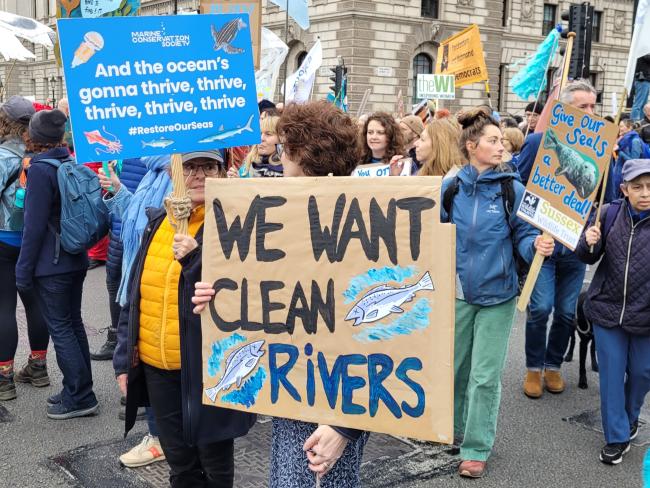
People on the March for Water, London, November 2024, clear on what they want from the water industry. Photo Workers.
During the dry summer months of this year, the water companies of England and Wales, along with regulator Ofwat and the Environment Agency, launched a publicity campaign called “Let’s Save Water”, designed specifically to promote a reduction in domestic water usage.
The supposed highlight of the campaign was a much-repeated TV advert showing young school children rising in revolt against irresponsible adults and appealing for behaviour change.
According to this caricature of British youth, we must take shorter showers, use watering cans instead of hosepipes, stop washing up with the water running and so on.
Contempt
The Guardian, reported in June that the industry has engaged a team of behavioural scientists to advise on the £75 million campaign. But the problem for the water companies is that they are held in contempt by their customers for their failures over years.
Since privatisation they have failed to invest in infrastructure, with no major new reservoirs in thirty years, and 60 per cent of water and sewer assets are over a century old.
Sewage
Regular water supply interruptions affect some areas, particularly in South East England. And river and sea discharges of raw sewage are so frequent they would barely make the news if it weren’t for the efforts of campaigners for safe swimming and water sports.
All the while, directors and shareholders pocket a fortune. Regulation has failed to control the privatised companies, and there are campaigns to return them to public ownership.
Investment
Water could be used differently, but that also would require investment. One water industry representative said, “At the moment we’re using world class drinking water to cool data centres and irrigate our golf courses.”
‘Water company owners didn’t come to invest, but to enrich themselves…’
Changing that would be possible given time and money. But water company owners didn’t come into this business to invest, they came to enrich themselves. Which is why leaks are not fixed and rivers are polluted.
As autumn rains arrive, the Environment Agency has declared drought in Yorkshire and severe drought in several areas across the South of England.
Minsters make pronouncements that people must prepare for emergences and how they will have updates from water companies about the measures they are taking to protect supplies.
Campaigners have been saying for ages, “stop leaks and invest more”. Publicity campaigns and government briefings are not going to achieve that.