
28 October 2026
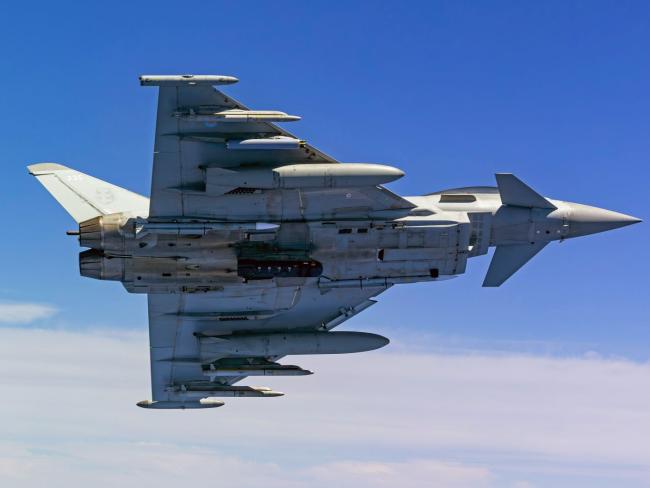
RAF Typhoon in air to air combat configuration. Photo AS1 Joshua Whiting / UK Ministry of Defence © Crown copyright 2026, licensed under the Open Government Licence v3.0.
On 20 October the government announced it would be expanding military support for Saudi Arabia. This marks further escalation in Britain’s military entanglement in the Middle East.
Defence secretary Wes Streeting, fresh from meeting his US counterpart Pete Hegseth at the Pentagon, said this would be a “defensive” intervention. He cited increasing rebel Houthi attacks, such as their bombing of Saudi oil facilities and their terrorist attack on Riyadh International Airport.
‘Defensive’
RAF Typhoon fighter jets would “conduct defensive counter air operations over Saudi Arabia, helping to protect Saudi cities, civilian populations and critical national infrastructure” from missiles and drones.
Streeting did not explain how intervening in a war over 3,000 miles away from Britain in any way defensive. The MOD assures the public that there will be no offensive strikes against the Houthis.
War
Yet what Streeting describes is potential warfighting. The Burnham government will also send Saudi Arabia an unspecified number of military advisers and a military transport plane.
But the British people don’t want to be involved in this war – a by-product of US aggression against Iran.
Escalation
Under the Starmer government, Britain was already supplying the Saudis with jets and had troops (“liaison officers”) on the ground there. Saudi Arabia is our biggest export market for fighter jets (72 Typhoons from BAE Systems). So, this is an escalation of an existing relationship.
The Trump government is temporarily holding back its operations in support of the Saudis in view of the US mid-term elections. The Burnham government, as a good collaborator, is stepping in to fill the gap. It seems the already overstretched UK military is being made to intervene to support the US government.